
Restaurant Margin Leaks & Technology
Restaurant margin leaks from technology, energy bills, and multi-site ops — floor-true consulting for full-service restaurants.
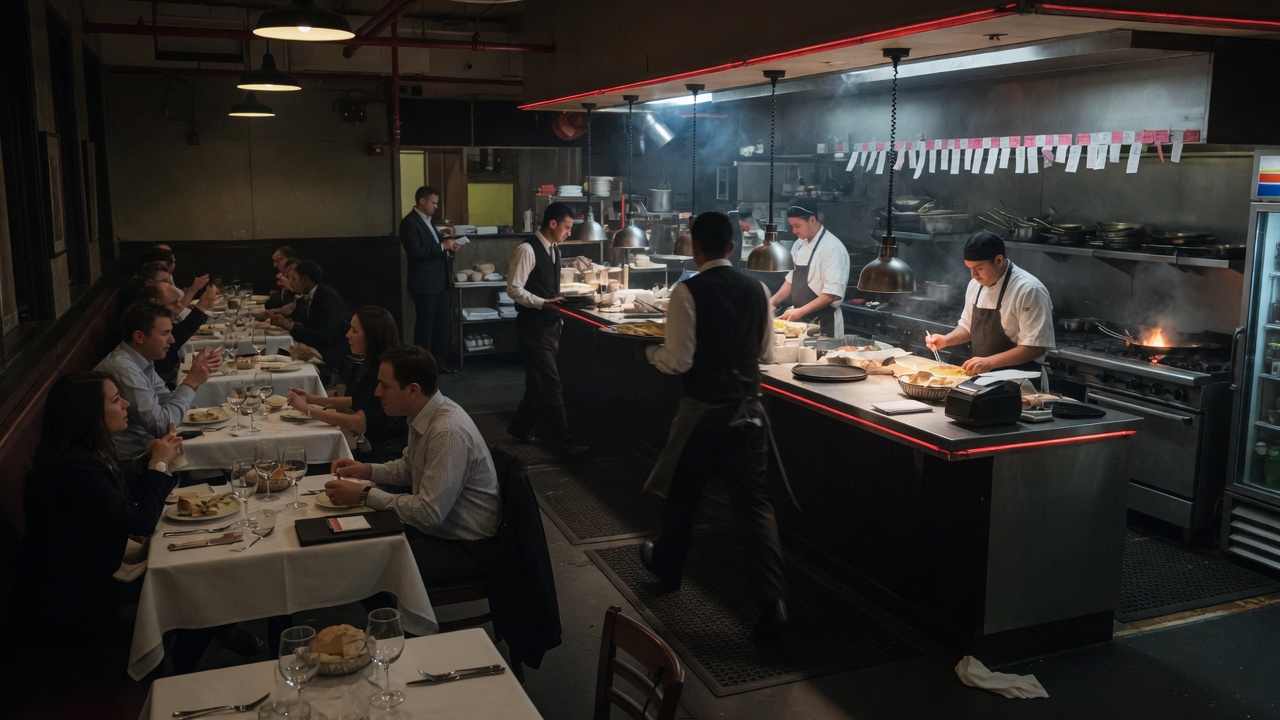
The pass is underwater. Tickets stack. Someone is hand-running food because the printer lied. The chef is burning passion that should have been protected by the house. By the time the owner sees the week’s numbers, the leaks are already in three places: labour “explained” as volume, waste explained as “busy,” and a stack subscription nobody connects to the chaos. That is restaurant margin leaks technology — technology not as a line item, but as the invisible tax on craft and memory.
iWagstaff Hospitality works with high-volume restaurants and multi-site groups across Australia, New Zealand, and serious APAC/ASEAN operators who need floor-true consulting — not another app pitch, not a pure energy brochure, not a lifestyle coach for a house that needs architecture. This page opens in restaurant language and maps every symptom to grit, stack, and foundation.
Where margin actually leaves a restaurant
Full-service restaurants sell nights people remember. Friction steals them. Margin does not only leave through food cost variance; it leaves through seconds of latency that become minutes of wait, through systems that force double entry, through cold rooms that quietly soften product, through second sites that never inherit the flagship’s nervous system.
Grit — the floor: heroics keep the shift alive. Undocumented process becomes operational debt. “We need more staff on Saturday” can be true roster math — or a kitchen fighting heat, broken flow, and tools that punish the brigade. Genius on the pan with chaos in the house is not destiny; it is a design failure.
Stack — the systems: POS, KDS, printers, payments, reservations, inventory, labour — each can be fine alone and lethal together. Integration debt, offline modes never tested, multi-site config drift, and product that only works in the demo create leaks that look like “training” or “culture.” Architecture under pressure means the tongs and the ticket agree when the room is full.
Foundation — energy: commercial kitchens are structural energy intensity, not bad habits alone. Walk-in discipline, defrost schedules, idle kit, HVAC fighting the pass, and peak demand aligned with service peaks write restaurant energy bills that feel unfair until someone reads them next to covers and POS peaks. Method for energy strategy lives on the energy service; here the point is simple: if the foundation bleeds, grit cannot save the house.
Who this is for
Core: multi-site restaurant groups and regional concepts where ops and tech debt compound site by site. Selective: high-volume single-site full-service restaurants with acute stack or bill pain and capacity for a funded Reality Check. Content, not ICP: micro independents and thin-admin cafés — we speak with empathy in insights; we do not sell enterprise architecture to a pizza shop that needs a clear sequence and cash discipline.
Full service restaurant operations consulting, in our mouth, means the house holds under covers — not a binder of best practices that never met a Saturday night.
Pain → triangle map
| Floor symptom | Stack mechanism | Energy / P&L effect |
|---|---|---|
| Pass underwater, tickets stacking | Latency, KDS backlog, printer failure | Peak kit + HVAC; labour overtime; guest walk risk |
| Walk-in warm / soft product | Alert gaps; no ops visibility | Refrigeration load, door discipline, $ leak |
| Second site “doesn’t feel like us” | Config drift; stack sprawl | Different meters, behaviours, portfolio blind spots |
| New oven will “fix service” | Integration with prep flow and tickets | Electrification, headroom, diversity factor |
| Software only works in the demo | Integration debt; no Saturday-night test | Always-on kit + network + peak concurrency cost |
What we do (links up — no full method clone)
Vertical pages must not rewrite service primaries. National phrases like hospitality systems architecture and commercial kitchen energy management live on service URLs. Here you get the restaurant door and honest bridges:
- Hospitality tech / systems architecture — stack audit, Saturday-night proof, product hardening for operators and vendors who need market-true systems.
- Energy for growth — load, kit, tariff, behaviour as capital that funds growth; restaurant bill pain in method form.
- Operations architecture — multi-site coherence and operational debt when scale multiplies cracks.
Conversion path: Surgical Reality Check with the person who owns the pass, the person who owns the stack, and the person who owns the bill — in one triage so margin decisions stop happening in silos.
Patterns of technology-shaped margin leaks
Latency as labour. Groups hire for “pace” when the real tax is ticket flow and routing. The brigade looks slow; the system is slow. Owners cut passion first because passion is visible and architecture is not.
Config as culture. Site two gets a fork of menus, modifiers, and printer maps. Training becomes folklore. Guests experience brand inconsistency as “they slipped,” not “nobody owned the master.”
Data seams that never meet. Covers, POS peaks, and energy peaks tell one story when joined — and three excuses when siloed. We care about that join because it is where fake trade-offs die (labour versus stack versus energy).
Capital theatre. New hardware, new panels, new POS — sequenced by who sold hardest. The house needs order: what protects Saturday night, what stops foundation bleed, what can wait. Insights own the long “fund first” arguments; commercially we refuse cheerleading.
Proof posture
Named case studies earn geo and metric claims. Until then we speak in operator-true patterns from pass, systems, and bill work — and we measure interventions across at least two of three constants whenever possible. No invented percentages. No green theatre.
Questions this vertical shares with insights
For bill mechanics in Australia, see why restaurant energy bills run high. For stack process, the tech audit insight and Saturday-night test pieces sit under insights. Short FAQ units above; deep articles keep one canonical each.
Genius on the pan, chaos in the house — that is not destiny. Protect the craft by hardening the house.
If technology is quietly taxing every cover, and the foundation is humming through the night while the P&L pretends it is weather, book a Reality Check. Isolate the bleed. Protect the memory. Free the craft.
How this connects to the other constants
Operations
Full-service restaurants live on the pass. When playbooks die at the second site, grit becomes unpaid overtime and guest memory becomes a coin flip.
Software
Restaurant margin leaks technology when the stack fails Saturday night: latency, printers, integrations, config drift — demo theatre exposed under real covers.
Energy
Commercial kitchens are energy beasts. Soft product, open doors, and peak demand next to service peaks write cheques the menu cannot price away.
Frequently asked questions
What are restaurant margin leaks from technology?
Margin leaks from technology are not only “software subscription cost.” They are ticket latency, KDS backlog, printer failure, config drift across sites, labour tools that misfit the floor, integration debt, and systems that only work in the demo. Those failures force heroics, extra labour, wasted food from slow turns, and guest friction that never shows as a clean line item.
How is this different from a restaurant POS consultant?
A pure POS engagement optimises a product path. We audit the stack as architecture under pressure — pass survival, integrations, multi-site coherence — and we join it to energy load and operations. POS consultant language is support here and primary on the hospitality tech service; this page owns margin-leak venue language.
Do multi-site restaurant groups get a different approach?
Yes in density, not in physics. Second sites expose whatever the flagship held together with heroics: playbook drift, stack sprawl, different meters and behaviours. Multi-site restaurant consultant method depth links to operations architecture; here we stay in how the second door fails the guest memory.
Where do restaurant energy bills fit if technology is the primary keyword?
Energy is the foundation constant on every serious kitchen. Bills in Australia (and NZ peers) are secondary language on this vertical and primary method on Energy for Growth. We always map stack pain next to load and process so “fix labour” and “fix power” are not fake choices.
Is a busy single-site restaurant in scope?
Selective yes — high-volume independents with real cover pressure, acute stack failure, or bill pain that can fund a Surgical Reality Check. Micro cafés and thin-admin takeaways are content audiences, not default consulting ICP.
Related
Ready for a Surgical Reality Check?
One triage across operations, systems, and energy — multi-stakeholder, zero fluff.
Request Reality Check