
How Can a Hotel Reduce Energy Costs Without Hurting Guest Experience?
How hotels can reduce energy costs without hurting guest experience — F&B plant, systems, and service quality together.
Hotels can cut energy without hurting guest experience by protecting room and public-area comfort standards while aggressively reducing back-of-house waste: F&B kitchens, refrigeration, extraction, laundry, and unmeasured peak plant. Guest memory is not improved by a cheaper lobby that feels wrong — or by a beautiful lobby funded by a kitchen that bleeds and fails at banquet peak.
Two hotels in one meter (often)
Many properties still manage “hotel energy” as a single story: rooms, corridors, pool, and a vague “other.” Full-service hotels are also restaurants and event factories. Commercial kitchen intensity patterns known from restaurants apply inside the hotel envelope — cooking, cold chain, dishwash, make-up air — plus laundry and banquet simultaneous load. If the programme only dims public lighting, F&B plant keeps the invoice honest.
Guest experience lives in temperature, noise, wait times, food quality, and frictionless stay. Energy programmes that attack guest-visible comfort first create reviews and soft occupancy damage. Programmes that ignore the pass create food safety and service risk while celebrating a small rooms win.
Where to cut (and what to fence)
- Fence: in-room comfort bands that match brand promise; critical public-area lighting and air quality; food safety temperatures; hot water reliability for guest use.
- Attack: idle kitchen kit after service; door discipline and soft cold chain; uncoordinated HVAC vs extraction; laundry schedules that spike demand without need; always-on zones nobody occupies; banquet preheat that starts “whenever we always have.”
- Instrument: submeter or interval insight for F&B plant vs rooms; alerts that reach people who can act; covers and banquet schedules next to load — the same data seam restaurants need.
Peak is not only check-in — it is banquet and breakfast
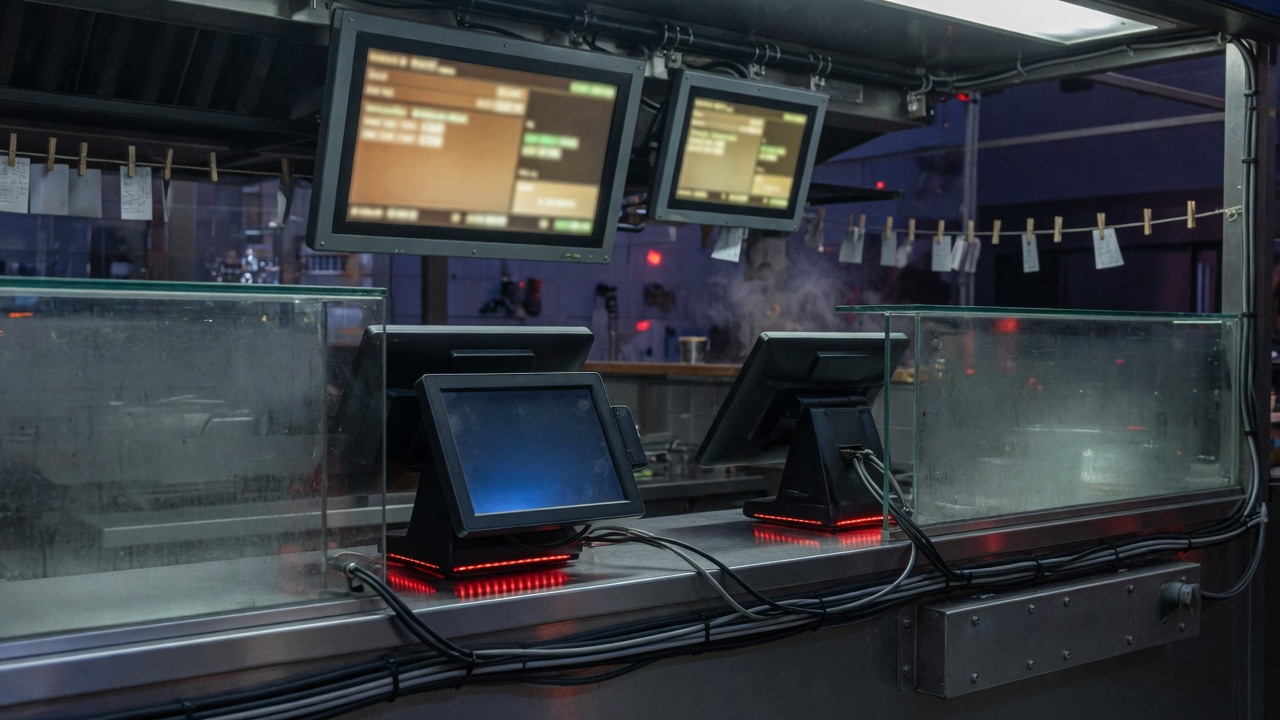
Hotel F&B peaks (breakfast push, wedding banquet, conference lunch) stress POS/KDS paths, labour, and plant together. Apply the Saturday night test to hotel service peaks: if the stack fails, chefs heroically leave kit up; if plant is blind, engineering and F&B argue after the invoice. Operational debt in hotels often hides in banquet tribal knowledge and config drift between outlets — see what operational debt is.
Ops + IT + facilities in one brief
Rooms division, F&B, engineering, and IT rarely share one capital narrative. Energy-without-hurt requires a single triage: what guests feel, what the pass needs, what the meter shows. Briefing pattern: ops, IT, and facilities in one audit. Sequencing capital — POS vs solar vs kit — still applies when the “restaurant” lives inside a hotel.
Guests forgive a quiet efficiency they never notice. They do not forgive a cold room, a late plate, or a soft buffet blamed on “sustainability.”
For venue-level positioning see hotel consulting and method depth on energy for growth. Soft next step: Surgical Reality Check — protect the guest memory while naming the plant and stack leaks finance already feels.
How this connects to the other constants
Operations
F&B service standards, banquet peaks, and laundry/kitchen SOPs decide waste vs guest-visible austerity.
Software
POS, kitchen systems, BMS integrations, and alerts — exceptions must surface before guests do.
Energy
Rooms, public areas, and F&B plant are different load stories; protect comfort, cut coincidence waste.
Frequently asked questions
How can a hotel reduce energy costs without hurting guest experience?
Separate guest-facing comfort from back-of-house waste: protect room and public-area standards while attacking F&B plant, kitchens, laundries, always-on idle load, and poor controls. Use systems that make exceptions visible so cuts land on waste and recovery — not on the guest memory.
Where do hotels usually over-cut or under-cut?
Over-cut: lobby temperature theatre and dark corridors that guests feel immediately. Under-cut: commercial kitchens, refrigeration, extraction, and unmeasured F&B peaks that never appear in “rooms-only” energy programmes.
What systems matter for hotel energy and service quality?
BMS/HVAC controls, F&B POS and kitchen display paths, cold-chain alerts, and the data join between occupancy, covers, and meters. Guest experience fails when IT and facilities optimise different nights.
Is this the same as hotel investment due diligence?
No. This is operator-facing efficiency across F&B, systems, and plant — not investor market studies or star-class only advisory.
Related
Ready for a Surgical Reality Check?
One triage across operations, systems, and energy — multi-stakeholder, zero fluff.
Request Reality Check