
Why Labour Problems Are Sometimes Stack and Energy Problems
Why labour problems are sometimes stack and energy problems — translation across chef, IT, and facilities languages.
Labour problems in hospitality are sometimes stack and energy problems in disguise: ticket latency, integration debt, and heat or kit inefficiency force heroics that feel like “we need more people.” Real roster gaps exist — but funding headcount alone while systems and plant bleed will not fix Saturday night. Translation across chef, IT, and facilities languages is the first diagnostic.
The translation table in one scene
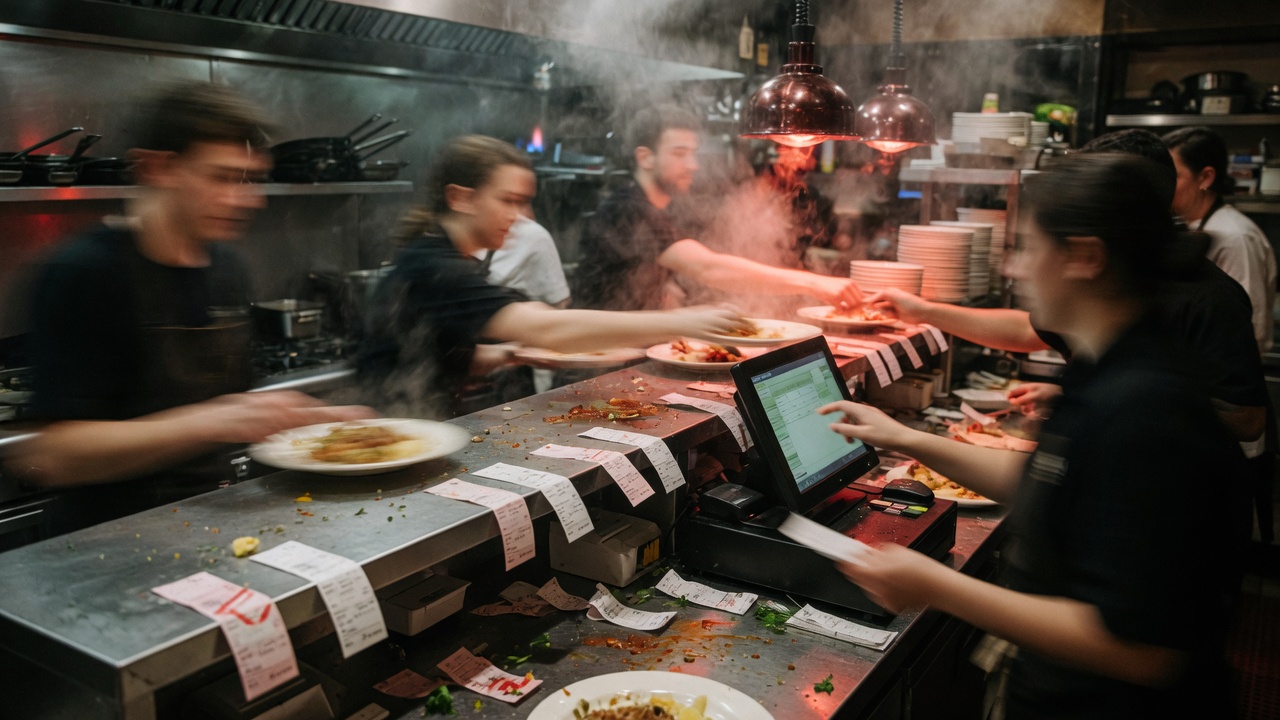
Peak service. The board is full. Someone says “we need another body on the line.” That may be true. Or: KDS is lagging and printers are reprinting; mods are verbal because the stack cannot carry them; a walk-in door has been open half the shift and product is soft; ovens were up two hours early “just in case”; seniors are doing junior work because only they know the workaround. That is operational debt plus plant waste, experienced as labour pain.
| Floor symptom | Stack hypothesis | Energy / plant hypothesis | True labour hypothesis |
|---|---|---|---|
| “Always underwater Saturday” | Concurrency failure, offline myth | Survive-mode kit, HVAC fight | Roster vs cover forecast mismatch |
| “Only seniors can open” | Undocumented config, no SOP system | Plant quirks tribal only | Training debt, skill mix |
| “Prep never finishes” | Bad inventory / ticket truth | Cold chain failures redo work | Prep labour underbuilt |
| “Guests waiting forever” | Payment / ticket path hangs | Recovery after equipment stress | Floor coverage gaps |
How to diagnose without blame theatre
- Observe one real peak with ops, IT, and facilities together — the Saturday night test.
- Time the system, not only the people. Ticket age, reprint rates, payment fails, alert noise.
- Read load beside covers. POS peaks and energy often explain “why the kitchen feels harder than the roster says.”
- Separate waste work from service work. Hours spent on double entry, hunting for truth, and recovering soft product are not “hospitality passion” — they are unpaid tax.
- Fund the binding constraint — capital sequence may be stack hardening or plant control before another FTE that burns out on the same mess.
What not to do
- Cut labour as “efficiency” while leaving plant and stack untouched — guests and chefs pay.
- Buy another app that demos well and dies at peak — labour absorbs the outage.
- Assume energy projects are facilities-only — behaviour and ticket flow decide held savings.
More hands on a broken board is still a broken board — just more expensive and more exhausted.
iWagstaff bridges operations architecture, hospitality tech, and energy for growth so labour strategy is not a silo. Soft next step: Surgical Reality Check when “we need more staff” is the only sentence left in three different meeting rooms.
How this connects to the other constants
Operations
Roster design, skill mix, and service standards — real labour needs vs heroics culture.
Software
Ticket latency, labour tools vs cover shape, offline chaos, double entry stealing hours.
Energy
Heat, recovery, soft cold chain, and idle kit that slow the pass and masquerade as headcount.
Frequently asked questions
Why are labour problems sometimes stack and energy problems?
When ticket latency, broken integrations, or blind plant force heroics, operators experience the pain as “not enough staff.” Heat, idle kit, and recovery cycles also slow the pass. Headcount is sometimes the symptom of stack misfit and energy inefficiency, not the root cause.
How do you tell labour design from stack friction?
Watch a true peak: if seniors invent paper paths when systems lag, or if the same roster works midweek and collapses only when concurrency spikes, stack and process debt are suspects. Pure volume growth with stable systems more often needs labour redesign.
Can energy efficiency reduce labour pressure?
Indirectly, yes: colder product integrity, less emergency recovery, and kit that matches prep flow reduce firefighting. Efficiency is not a substitute for fair rostering — it removes waste work created by plant and process failure.
What should multi-site leaders measure together?
Covers and labour hours beside ticket times, incident rates, and site energy intensity. Separate dashboards keep three teams arguing; one narrative enables one capital decision.
Related
Ready for a Surgical Reality Check?
One triage across operations, systems, and energy — multi-stakeholder, zero fluff.
Request Reality Check