
What Is the Saturday Night Test Across Ops, Stack, and Energy?
The Saturday night test across operations, software, and energy — what actually fails when covers peak.
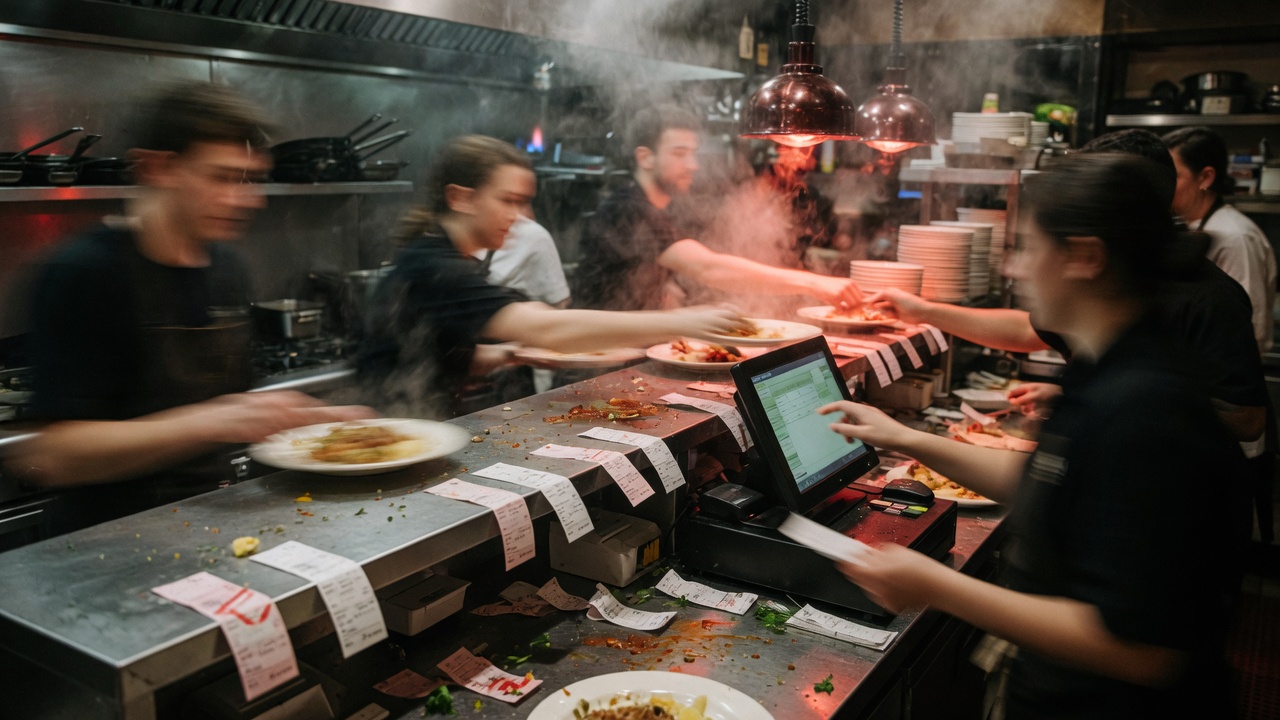
The Saturday night test asks whether operations, software, and energy behaviour hold when covers and concurrency peak. Midweek demos and quiet lunch services do not count. If the pass, the stack, or the plant only works when the house is half full, you do not have a strategy — you have a fair-weather system.
Why peak is a triangle, not an IT outage
When covers spike, three loads rise together. Guests and tickets stress the stack. The brigade stresses process, prep, and expo. Cooking, dishwash, extraction, and HVAC stress electrical and thermal plant. Operators under pressure invent workarounds: early fire, doors propped, stations left hot, paper tickets, verbal mods. Those workarounds are operational debt accruing in real time — paid as comps, labour, and kWh.
Calling peak “an IT problem” misses door discipline and demand. Calling it “we need more staff” misses ticket latency and kit inefficiency. Calling it “the power bill is high this month” misses that the same night broke the KDS. The test forces one window, three languages.
What to observe on the floor (chef language)
- Is the board readable and paced, or is expo drowning in re-fires and mods?
- Do juniors execute without senior tribal knowledge, or does the night depend on two heroes?
- How fast does the house recover after a printer or POS blip — minutes or the whole turn?
- Are 86s and allergen paths system-true or shouted across a hot line?
What to observe in systems (IT language)
- Ticket latency under concurrency; queue depth; failed prints; payment hangs.
- Network segmentation and Wi-Fi myths; single points of failure; cloud vs local paths.
- Offline mode: tested by the floor this quarter, or a vendor claim from onboarding?
- Multi-site config: did a menu or price change land cleanly, or only on site one?
- Logs and incident visibility after the fact — or only Slack folklore?
A full tech stack audit uses this peak as the scoring centre, not a feature spreadsheet.
What to observe on the meter and plant (energy language)
- Does demand spike track service windows and POS peaks — or unexplained shoulder load?
- Are ovens, fryers, and hot-hold left in survive mode long after tickets slow?
- Refrigeration: door discipline under rush; alarms muted; soft product after the war?
- HVAC and extraction fighting the room — guest comfort vs kitchen heat as a zero-sum?
Aligning covers, POS timestamps, and interval energy is the data seam covered in covers, POS peaks, and bills. Without it, Saturday night is three post-mortems that never meet.
How to run the test without theatre
- Pick a real peak — not a staged demo night. Multi-site: pick a known hard venue and a “quiet” control if you can.
- Seat the triangle — ops, systems, facilities (or owner wearing those hats) with a shared observation sheet.
- Trace critical paths — order → kitchen → expo → pay; cold chain; power events.
- Score hold vs heroics — what required a senior human patch? What required plant abuse?
- Sequence fixes — binding constraint first (network, process standard, plant control), not the vendor with the loudest roadmap. Capital order may follow POS vs solar vs kit.
If it doesn’t survive the pass, the stack, and the bill — it isn’t a strategy.
iWagstaff uses the Saturday night test inside hospitality systems architecture, bridged to operations and energy for growth. Soft next step: Surgical Reality Check when you need one peak narrative for the whole buying committee.
How this connects to the other constants
Operations
Prep, station readiness, expo discipline, and recovery when the board is full — grit under heat.
Software
POS, KDS, payments, printers, network, offline, and concurrency — proof, not pitch.
Energy
Coincidence demand, extraction/HVAC fight, refrigeration stress, idle after the rush — the meter’s view of peak.
Frequently asked questions
What is the Saturday night test across ops, stack, and energy?
It is a peak-service proof: when covers and concurrency spike, do floor standards, software paths, and plant/load behaviour hold together? Anything that only works midweek or in a demo fails the test — regardless of vendor promises.
Why include energy in a software peak test?
Peak covers drive cooking load, extraction, HVAC, and often idle kit left “up” under heroics. Demand and consumption coincide with ticket pressure; energy is not a separate season from service.
Who runs the Saturday night test?
Ops leads the service lens, IT owns systems and network, facilities owns plant and meters — but one observer set must watch all three in the same window, not three post-mortems next week.
What fails most often?
Public patterns in hospitality incidents cluster around integration joins, local network/print paths, offline myths, process that only seniors know, and plant left in survive mode — not a single “bad app.”
Related
Ready for a Surgical Reality Check?
One triage across operations, systems, and energy — multi-stakeholder, zero fluff.
Request Reality Check